

A business's SEO starts with choosing searches with purchase intent, having identical business details everywhere and one page per service. Then you improve what already exists and measure more than clicks: with an AI summary, people click in 8 % of visits, compared with 15 % without it.
You have been sold it in two ways. Some say SEO died with artificial intelligence. Others, that it is a simple trick you can learn in a weekend course. Meanwhile, your competitors show up on Google, and you pay for ads every month to be seen.
This is a class for business owners who do not want to be SEO experts but do want to understand enough not to throw money away. There are 11 lessons in three levels. The first ten are based on the video Give Me 23 Minutes, and I’ll Give You 10 YEARS of SEO Knowledge, by Nico from the AI Ranking channel (22 minutes, published on October 21, 2026). We watched it in full, checked it against Google’s official documentation and added real screenshots of searches in the Dominican Republic. Lesson 11 is ours: it comes from this blog’s own data.
The class in one table
If you are in a hurry, here is everything. The rest is the why and the how.
| Level | Lesson | What you do this week |
|---|---|---|
| Basic | 1. Choose searches that bring customers | Search Google for what you sell and see who shows up |
| Basic | 2. Let Google know who you are | Match name, address and phone everywhere |
| Basic | 3. One page per service | Split the services that now live on a single page |
| Basic | 4. Do not give up in month two | Set a review date three months out |
| Intermediate | 5. Cover the whole topic | Write down the questions customers ask you |
| Intermediate | 6. Your old pages are worth more | Find the pages sitting on Google’s second page |
| Intermediate | 7. The pages nobody links to | Link every article to your service page |
| Advanced | 8. Do not measure yourself by clicks alone | Ask every customer how they found you |
| Advanced | 9. The questions AI asks itself | Answer the follow-up questions on the same page |
| Advanced | 10. Rank the whole business | Connect your social media in Search Console |
| Ours | 11. An image that explains also ranks | Replace a block of text with a drawing or a screenshot |
Level 1: the basics almost everyone gets wrong
1. Choose searches that bring customers
The first mistake is choosing the keyword with the most searches. It seems logical: bigger net, more fish. In practice, the most popular search in your industry usually comes from someone who wants to learn. The purchase, if it comes, comes later.
Try the test Nico proposes, which costs nothing. Open an incognito window, from the city where you sell, and search two things in your industry: a question and a service. We did it with dentistry on October 26, 2026.
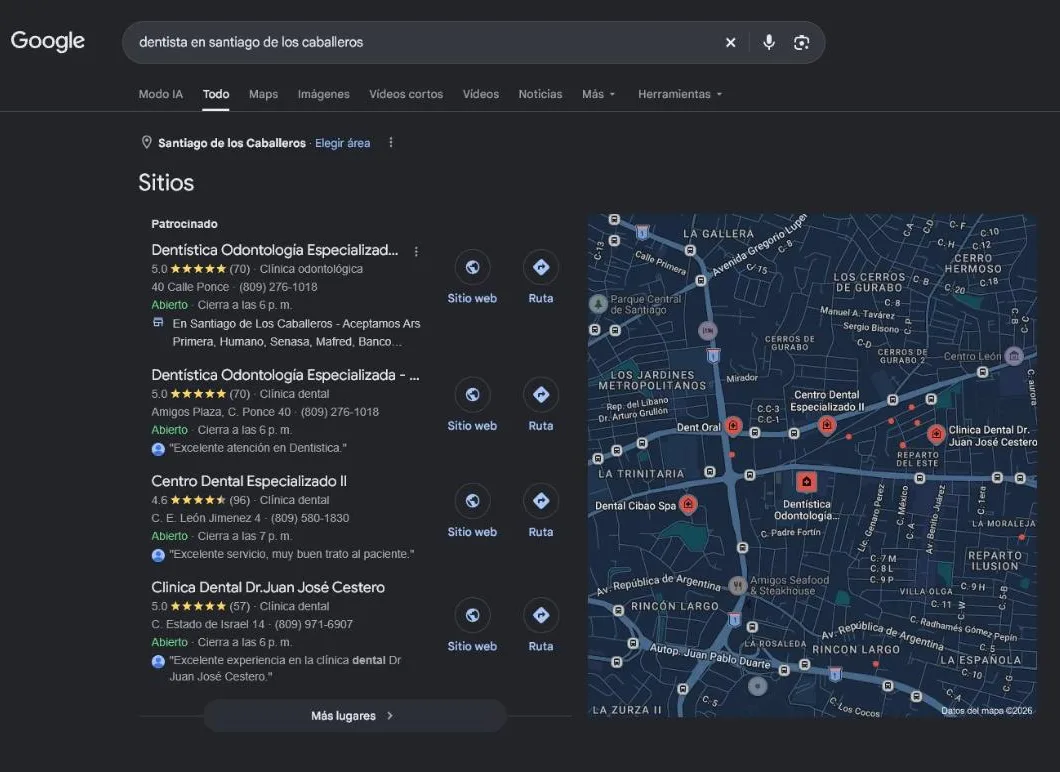
For “por qué sangran las encías” (why do my gums bleed), Google answered itself with an artificial intelligence summary and placed a toothpaste brand’s ad underneath. You will see it in lesson 8. For “dentista en santiago de los caballeros”, the one above, four clinics showed up with their phone number, their reviews and directions.
The first search has far more volume. The second brings patients. If you are a clinic, your first page has to fight for the second.
The rule: before writing a single line, search the phrase and see what Google shows. If articles and videos that explain show up, the intent is to learn. If businesses, maps and prices show up, the intent is to buy.
2. Let Google know who you are
Google needs to trust that your business exists and is a single one. For that it compares your name, your address and your phone number in every place you appear. This is called NAP (name, address, phone).
Google Business Profile guidelines are clear: the name must match the business’s real name, the one on the storefront, the website and the stationery. They ask for an exact address, with no P.O. boxes, and a phone number that connects to that location, local if possible.
Look at the photo above. The sign says “Colmado Henry”. Suppose on the website you put “Colmado Henry SRL” because that is how it is registered, on Google Maps “Colmado y Bar Henry” and on Instagram “Henry Express”. For you it is the same business. For a machine, they are four names.
The rule: write the exact name, address and phone number once, and copy them letter by letter on your website, your Google profile, Instagram, Facebook, YouTube and any directory.
3. One page per service
It is, according to Nico, the mistake he sees most: a four-page website (home, contact, one article and “Services”, with everything crammed in there). That single page tries to compete for ten different searches and wins none.
The fix is for “Services” to become a hub page with a summary and a link to a dedicated page for each service. A dentist would have pages for implants, orthodontics, whitening and cleaning. If you only offer one service, you can split by type of customer or by area.
Here is the warning the video mentions in passing. Google’s spam policies penalize what they call doorway pages: near-identical pages created to rank for cities or similar searches. Nico proposes that each page differ from the others by at least 50 %. That is his rule of thumb; Google gives no percentage. What Google asks is that each page be useful on its own.
The rule: if a service page only changes the city name, do not publish it. If it answers prices, process, questions and cases for that service, do.
4. Do not give up in month two
Nico says this lesson hurt. He shows in Search Console a website they published on April 19. It spent about two and a half months at 15 to 26 clicks a day, with hardly any changes. Then it took off: according to his screenshot, it now averages about 1,000 clicks a day. We do not know what industry it is in or what else they did, so take it as an isolated case.
What is official: Google’s starter guide says every change takes time to show up, that some are visible in hours and others in several months, and recommends waiting a few weeks before judging.
The rule: if you need customers this month, SEO will not give them to you. Run ads while SEO matures, and set the first serious review at three months.
Level 2: when you already have a website and you are stuck
5. Cover the whole topic
A page that chases a single keyword stays alone. What Google rewards is your website covering a whole topic, with all its questions, and everything pointing to your service page.
The simplest method needs no tools: for two weeks, write down the questions customers ask you on WhatsApp, by phone and in the store. Group them by similarity. The main question in each group is an article title; the others, its sections. Then look at Google’s “People also ask” box when you search for your service, and add the ones that are missing.
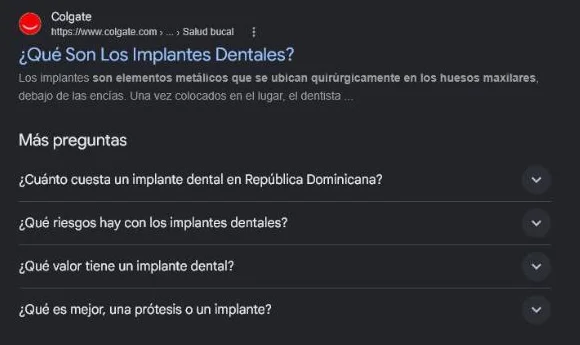
Nico uses his own tool, Datawise (he discloses it in the video), and got 282 questions for “restaurant accounting” in the United States. Not all of them are useful. Choose the ones someone about to hire you would ask.
6. Your old pages are worth more than new ones
Before writing something new, improve what almost works already. In Google Search Console, go to Performance, check the Average position box at the top and open the Pages tab. Look for pages with an average position between roughly 9 and 16: Google already shows them, but at the edge of the first page or on the second.
Those are your candidates. Update data and prices, answer missing questions, add images that explain and links from your other pages.
A warning the video does not give: Google asks in its helpful content guide whether you change page dates to make them look new without having changed the content. Updating the date without updating the text does not count.
7. The pages nobody links to
Google finds your pages mainly through links from other pages it already knows. Its starter guide says so. A page nobody links to within your website is a page Google struggles to find and value.
It is easy to forget when you publish often. Every new article should link to your service page and to two or three related articles, with text that says where it leads (“how much an implant costs”), never “click here”. And the other way around: when you publish something, go back to two old pages and link to it from them.
If your website already has many pages, there are tools that suggest links. Review each suggestion before accepting it. Nico warns about it: sometimes the tool proposes links that only “seem to make sense”.
Level 3: SEO with artificial intelligence
8. Do not measure yourself by clicks alone
Now there are rankings, clicks and something more: mentions and citations inside AI answers. A customer can ask ChatGPT or Google about a service, get your name and phone number, and call you without ever visiting your website.
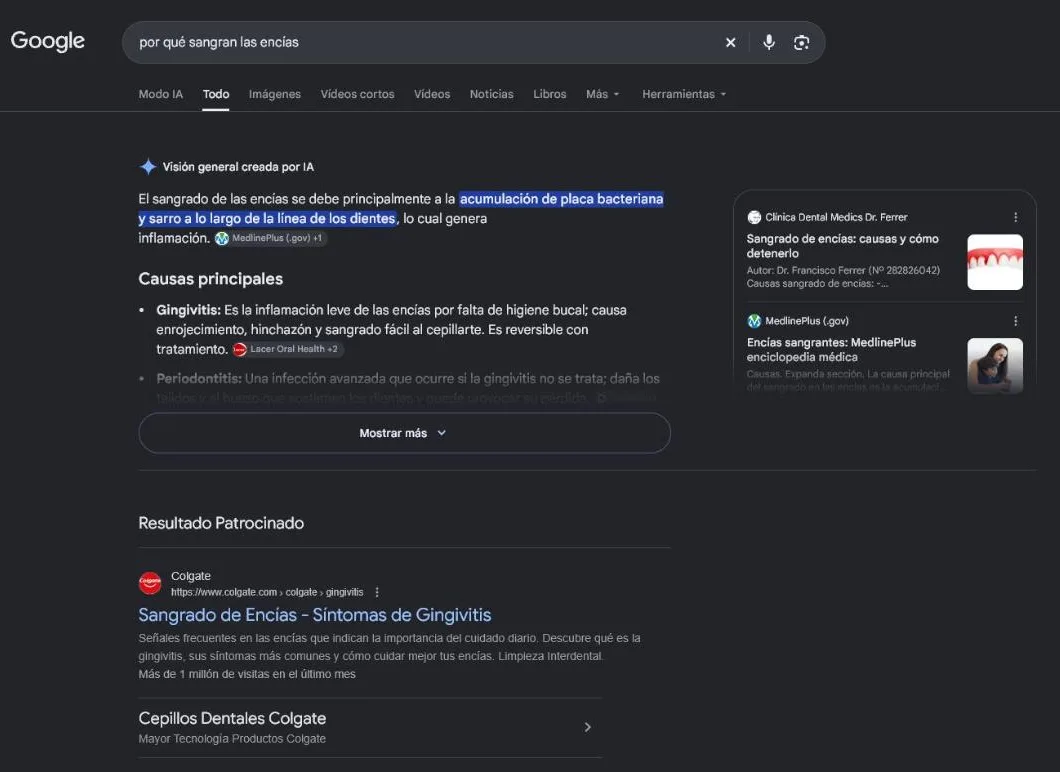
Clicks drop when that summary appears. Pew Research analyzed the browsing of 900 adults in the United States in March 2025: with an AI summary on the page, people clicked a traditional result in 8 % of visits; without a summary, in 15 %. They clicked the links inside the summary itself in 1 %.
That said, being the source cited in that summary is worth something even without a click, because your name stays in front of the person deciding.
The rule: measure what pays the bills. Ask every new customer “how did you find us?” and write it down. Count calls, WhatsApp messages and store visits. Clicks are only one of the signals.
9. The questions AI asks itself
When you ask Google’s AI something, it does not run a single search. Google explains it in its documentation: AI Overviews and AI Mode can use a technique called query fan-out, which launches several related searches on subtopics to build the answer.
If someone asks “how much does a dental implant cost in Santiago?”, the AI probably also searches how long it lasts, whether it hurts, whether insurance covers it and how many appointments it takes. If your page answers all that, you have a better chance of being the source.
You do not need tricks. The same documentation says there are no additional requirements to appear in AI Overviews or AI Mode, no special files and no new markup. And its 2026 guide insists on unique content, made by someone who knows, that offers more than what everyone already knows. We explain it in what SEO is and how to appear in AI.
The rule: on every service page, after the main answer, answer the five questions that always come next.
10. Rank the whole business
Your business enters Google through several doors: your website, your Google profile, your YouTube channel, your Instagram and your TikTok. Nico says his video outranks the website of Ahrefs, one of the biggest SEO tools in the world, for a search that matters to him. For some questions, Google prefers to show a short video: Nico gives the example of how to do a bicep curl, where the first thing that appears is videos.
Google acknowledges it with facts. Since July 2026, Search Console lets you add your Instagram, TikTok, X and YouTube accounts to see how that content performs in Search, Discover and Google News.
The rule: use the same name and contact details on every platform (go back to lesson 2) and connect your social media in Search Console.
Lesson 11: an image that explains also ranks
We took this one from our own blog.
We reviewed Search Console for the last 12 months, up to October 24, 2026. The blog received 38 clicks from web search. 36 of those 38 went to the two image size guides, the one for WhatsApp and the one for social media. Another 18 clicks came from Google Images, all to those same two guides.
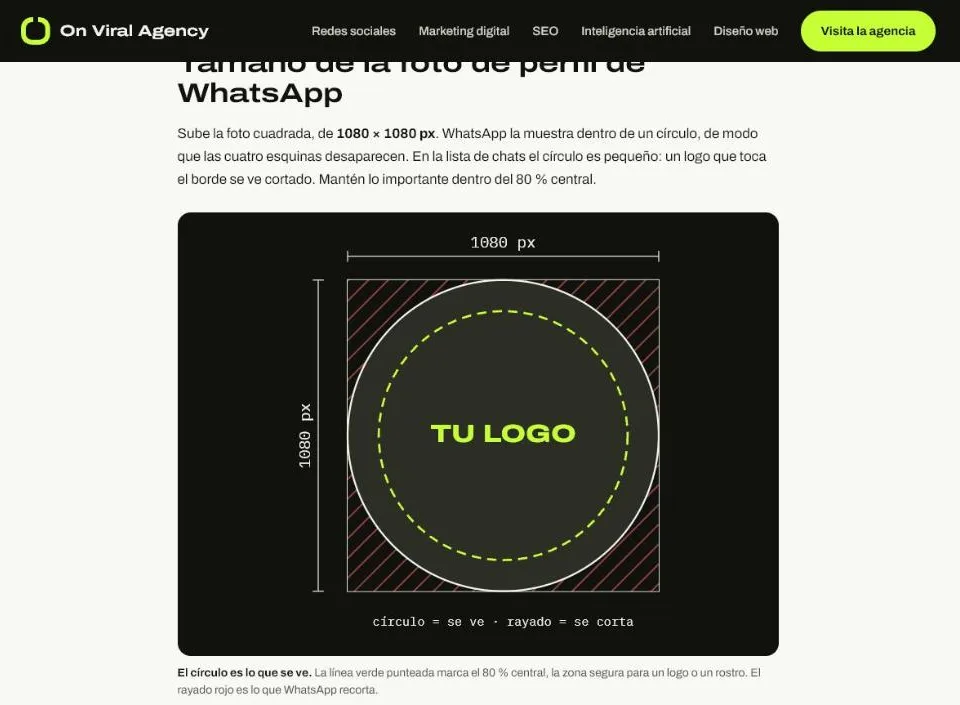
What did those guides have that the other articles did not? They answered a concrete question and showed it with a drawing. The rest were blocks of text. Careful: the measurement is small and does not prove the drawing is the only cause. But it is the only clear difference between what worked and what did not.
Google backs it in its Google Images guide: it asks for sharp images, placed near the text they illustrate and with alt text that describes them. And it makes sense: a block of 1,000 words in a row wears anyone out, especially on a phone.
The rule: every time you explain something that can be seen (a size, a before and after, a step on a screen), show it with a real photo, a screenshot or a drawing. Write the alt text as if you were describing it to someone who cannot see the image.
Where you start this week
Do not do all 11 at once. This is the order we recommend if your website is small:
- Monday: search your three main services with your city in incognito. Write down who shows up.
- Tuesday: match name, address and phone on your website, your Google profile and your social media.
- Wednesday: list the services that now live on a single page.
- Thursday: write the 10 questions you get most on WhatsApp.
- Friday: if you already have Search Console, find your pages at an average position of 9 to 16.
If you want to see the most common pitfalls before touching anything, read the 7 SEO mistakes you are probably making.
And if you would rather have someone review your website with you and tell you where to start, message us on WhatsApp.
Sources
Accessed on October 26, 2026.
- Nico, AI Ranking. Give Me 23 Minutes, and I’ll Give You 10 YEARS of SEO Knowledge. YouTube, October 21, 2026.
- Google Search Central. Search Engine Optimization (SEO) Starter Guide. Updated December 10, 2025.
- Google Search Central. AI features and your website. Updated December 10, 2025.
- Google Search Central. Guide to optimizing for AI search. Updated July 10, 2026.
- Google Search Central. Spam policies for Google web search. Updated August 28, 2026.
- Google Search Central. Creating helpful, reliable, people-first content. Updated October 5, 2026.
- Google Search Central. Google Images SEO best practices. Updated March 2, 2026.
- Google Search Central. Analyze social and video content. Updated July 29, 2026.
- Google Business Profile Help. Guidelines for representing your business on Google.
- Pew Research Center. Google users are less likely to click on links when an AI summary appears in the results. July 22, 2025.
- Our own data: Google Search Console for blog.onviral.agency, from October 25, 2025 to October 24, 2026, web search and Google Images.
Main photo: Colmado Henry, by Daniel Lobo, on Wikimedia Commons, licensed under CC BY 2.0. Cropped to 16:9.

Frequently asked questions
How long does SEO take to show results?
Google says a change can show up in hours or in several months, and recommends waiting a few weeks before judging. For a new website, allow at least three months before expecting customers from search.
Do I need a separate page for each service?
Yes, if you offer services people search for separately. A single page with everything competes poorly for each search. What Google penalizes are near-identical pages created only to rank, for example one per city with the same text.
Did SEO die with artificial intelligence?
No. Google states in its 2026 guide that optimizing for AI search is still SEO, and that no special files or new markup are needed. What changed is how it is measured: there are fewer clicks and more mentions.
What do I do first if I know nothing about SEO?
Search Google for what you sell, from your city and in an incognito window, and see who shows up. Then check that your business's name, address and phone number are identical on your website, your Google profile and your social media.
Do images help SEO?
They help when they explain something. Google Images is another way in, and Google asks for descriptive alt text and images placed near the text they illustrate. On our blog, the two guides with drawings took all the clicks that came from Google Images.